If golf is a priority when you buy in Costa Rica, three places on the Guanacaste coast are worth your time: Hacienda Pinilla, Reserva Conchal, and the Papagayo Peninsula. They are the communities where you can own a home and play championship golf without getting in the car, and they are not interchangeable — they differ in how you own the land, what the club membership actually gives you, and how much of the year the course stays busy.
And if you are reading this for a partner who plays while you would rather be on the beach: all three are worth your time too. The course is the reason these communities are the best-maintained places on this coast, and most of what that buys you has nothing to do with golf. There is a section on that below.
I am Tiago Leao, a real estate agent with KRAIN in Guanacaste. If you came here from my video, this is the full version I promised. If you want help with your specific situation, message me on WhatsApp and tell me your budget and how often you would actually play — that answer moves people between these three faster than anything else.
First, the thing that catches most buyers out
Buying a house inside a golf community does not automatically make you a member of the golf club.
In Costa Rica, the home and the club are usually two separate things. The property is one purchase; access to the course is a membership, a resident rate, a transferable right, or nothing at all, depending on the community, the section you buy in, and sometimes the individual unit. I have seen buyers assume that a golf-course view means golf privileges, and find out at closing that the membership is a separate cost, or that it did not transfer from the seller.
So before you fall for a house, make sure you know three things:
- Whether any club or golf right conveys with this specific property, and whether it transfers to a future buyer
- The current cost: initiation or transfer fee, annual dues, cart and green fees at the resident rate
- Whether your guests and tenants can play, and at what rate — this matters enormously if you plan to rent
Everything below assumes you are going to ask those questions. The rest is what makes each place different.
1. Hacienda Pinilla
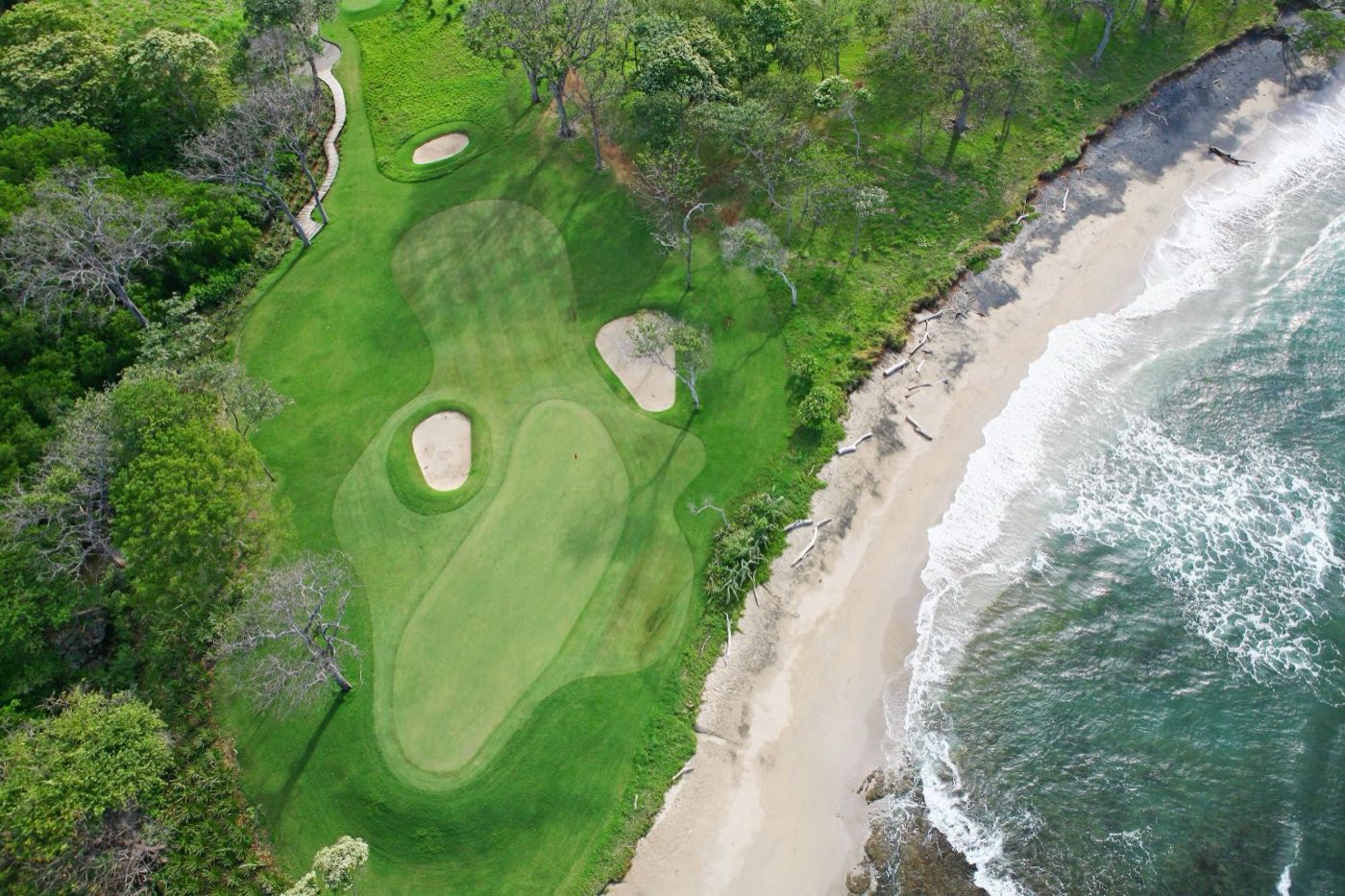
An 18-hole championship course designed by Mike Young that plays to par 72 at up to roughly 7,200 yards, holding an Audubon Cooperative Sanctuary designation for its conservation practices. The routing runs through 4,500 acres of gated coastal land and out toward the Pacific, with about three miles of coastline inside the property.
What makes Pinilla the strongest option for most golf buyers is simple: there are real residential neighborhoods built directly around the course, not just near it. Reserva de Golf, for example, is a defined 136-lot neighborhood along the fairways. You can buy a lot on the course and build, buy an existing golf-course home, or buy a condo and still be minutes from the first tee.
The rest of the community backs it up — a beachfront Beach Club, an equestrian center, tennis and pickleball, mountain-bike and hiking trails through dry forest, a small market, and the JW Marriott operating inside the gates. Ownership here is the ordinary kind that foreign buyers are used to, which keeps the legal side straightforward — your attorney confirms exactly how your specific property is held.
It fits the buyer who wants to genuinely live in a golf community, wants the beach five minutes from the course, and wants a range of price points to choose from rather than one narrow band. It also fits families who will never touch a club — the trails, the beaches, the equestrian center and the quiet streets are the reason plenty of my buyers here chose it.
Pinilla is where we sell more homes than anywhere else on this coast. My agent's view of the neighborhoods, plus current listings inside the resort, is on the Hacienda Pinilla community page, and the deeper write-up is in my Hacienda Pinilla guide.
2. Reserva Conchal
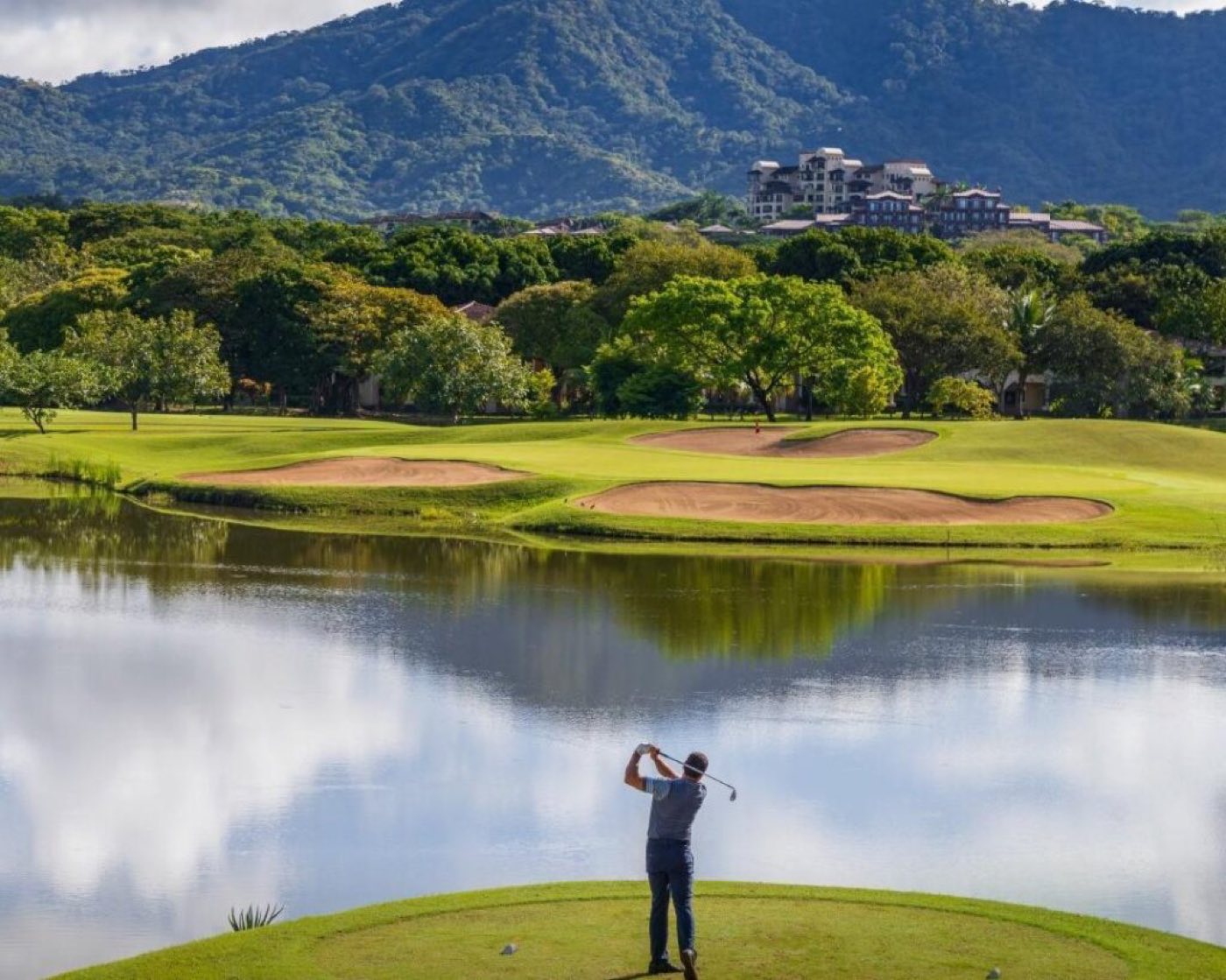
An 18-hole championship course designed by Robert Trent Jones II, also certified as an Audubon sanctuary, inside roughly 2,300 acres behind Playa Conchal's crushed-shell beach.
The trade here is golf plus a fully managed resort environment. The private Beach Club sits directly on Conchal. Restaurants, landscaping, security and infrastructure are all handled to a resort standard, and two international hotels — the all-inclusive Westin and the W Costa Rica — operate inside the same gates. The community also runs an unusual sustainability setup for this coast, including renewable energy, on-site water treatment, and desalination, which is worth understanding in detail in a region where water is the real long-term question.
Residentially it is the most varied of the three: seventeen named communities ranging from golf-view condominiums through townhomes and custom homes to building lots, each with its own character, administration and fee structure. That variety is the strength here — there is a version of Conchal at most price points — and it means the section you choose is worth understanding as carefully as the house itself.
It fits the buyer who wants golf and the beach handed to them without managing anything, and who likes having a resort's restaurants and service on the doorstep. Non-golfers do well here for the same reason: the Beach Club, the restaurants and the landscaping are maintained to the same standard as the course.
More detail in my Reserva Conchal guide, and if you are weighing this stretch of coast generally, Flamingo vs Conchal vs Potrero is the comparison I send most often.
3. The Papagayo Peninsula
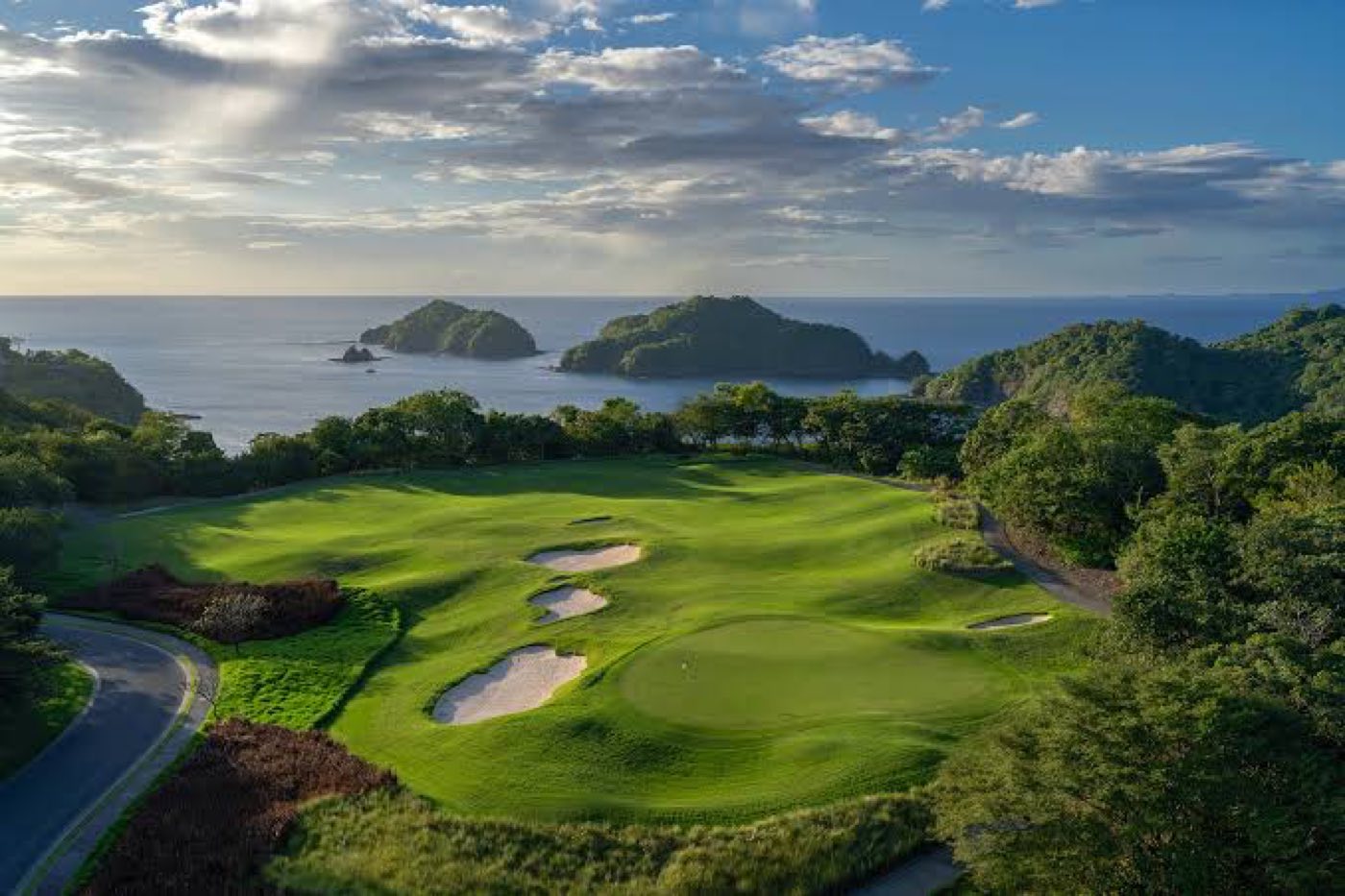
The most luxurious of the three, and the most specialized. The Ocean Course is an Arnold Palmer Signature design with ocean views from 14 of its holes, set on a peninsula in the Gulf of Papagayo surrounded by some of the highest-end real estate in the country, with the Four Seasons and Andaz nearby and Liberia airport the closest of any community here.
It is also the most private setting of the three: a peninsula of headlands, coves and protected forest, with hotel-grade service, marina access and beaches that most people never see. Ownership works differently from property to property here, so one of the first things I do on a Papagayo home is walk you through exactly how that one is held and what comes with it.
It fits the buyer at the top of the market who wants resort-grade everything, the shortest airport run, and the most dramatic golf of the three — and the non-golfer at that level, who is really buying the setting, the privacy and the hotels. Inventory is small and tightly held, so the right property tends to be found rather than shopped — worth starting the search early.
What these communities give you if you never play
I sell plenty of homes in these three to people who do not own a set of clubs, and the reasoning is always some version of the same thing: a golf course is an expensive thing to keep alive in a dry climate, so a community that maintains one to championship standard maintains everything else too.
What that actually means day to day:
- Roads, landscaping and security that stay maintained. The same crews and the same budget cover the whole property, which is why these communities look the same in October as they do in February.
- Open space that will not be built on. A course is 150-odd acres of permanent green in the middle of a community, plus the trees, wildlife corridors and quiet edges that come with it. In a market where the lot next door can become a construction site, that is worth real money.
- Somewhere to go on foot or by bike. Wide, low-traffic streets, trails, and a clubhouse restaurant that works as a neighborhood bar for people who never tee off.
- The rest of the amenities. Between these three you get beaches and beach clubs, tennis and pickleball, gyms, pools, restaurants, an equestrian center and hotels inside the gates.
- Resale and rental demand. Golfers are a small share of buyers but a reliable one, and a golf address widens the pool of people who want your house later. Guests book them for the setting as much as the tee times.
What you are paying for, through the dues, is exactly that standard of upkeep and that open space — so know the monthly number going in and decide what it is worth to you. For a lot of my non-golfing buyers, it is the reason they chose one of these three over anywhere else on the coast.
What to know before you make an offer
Golf communities layer a club, a master association and a section association on top of each other, and each one has its own costs and rules. Before you offer:
- Make sure you know the dues — the club, the section and the master resort — so the monthly number you are working with is the real one.
- Know what golf access comes with the property, what it costs, and whether it passes to the next owner.
- Know the section's rental rules if you plan to rent, including whether your guests can use the club and the course.
- Ask about the association's reserves and anything already planned for the year ahead.
- Run the standard checks that apply to any purchase here: due diligence, the water letter, and title and plano.
How I would choose between the three
Three questions usually settle it.
How often will you really play? Every week, and you want the course out your door: Pinilla. A handful of rounds between beach days: Conchal, where the Beach Club carries the rest of the week.
Do you want to manage anything? No: Conchal. Somewhat: Pinilla. Not the question you are asking: Papagayo.
Who else is coming? Kids and non-golfing partners usually decide this one. Pinilla spreads out across beaches, trails and an equestrian center; Conchal keeps everyone inside one managed resort; Papagayo is the quietest and the most grown-up of the three.
Ready to look?
Tell me your budget, how often you would play, and whether this is a full-time home, a second home or a rental, and I will tell you which of the three I would put you in and what is currently available. Message me on WhatsApp — I answer every message myself, in English, Spanish or Portuguese — or browse every current listing on the site.
Course details above are what the clubs currently publish, and access terms change — I check the current terms for whichever property you are looking at.
Interested in learning more?
Get in Touch →