Home / Communities / Playa Grande
Protected Surf Town · ≈1 hr 10 min from Liberia Airport
Playa Grande
World-class waves inside a national park — two minutes from Tamarindo by boat, and permanently protected from ever becoming it.
World-class waves inside a national park — two minutes from Tamarindo by boat, and permanently protected from ever becoming it.
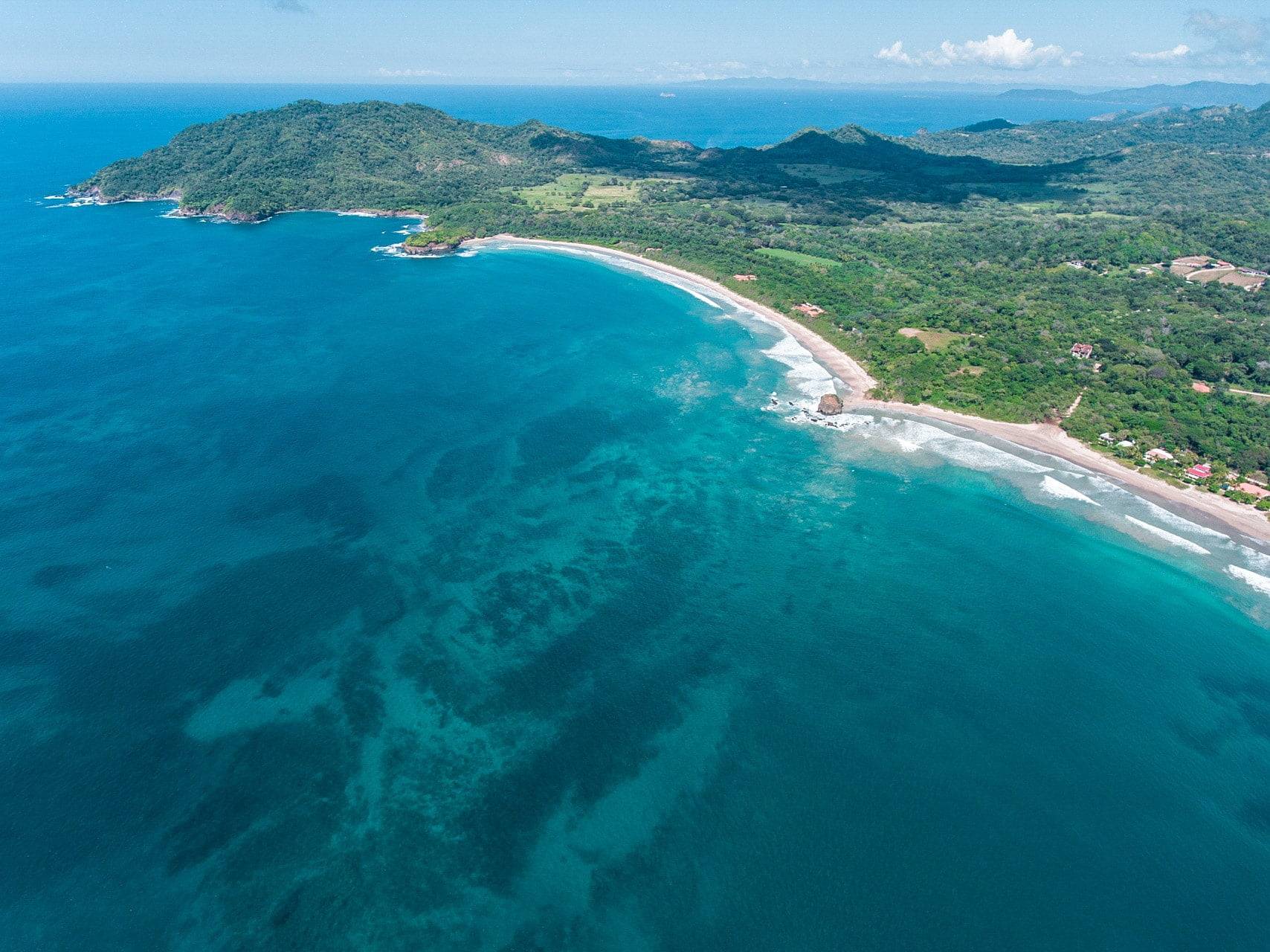
Playa Grande sits directly across the estuary from Tamarindo — a two-minute boat shuttle — and lives by completely different rules. The beach is part of Las Baulas National Park, one of the world's most important leatherback turtle nesting sites, and that protection shapes everything: no construction on the beachfront strip, lighting restrictions at night, low-density zoning behind it, and a permanent cap on how big this town can ever get.
The community that chose Grande chose it deliberately: surfers, nature-first families, and owners who want dark skies and empty sand over restaurants and nightlife. There's a small core of good restaurants, a market, surf shops and boutique hotels — and Tamarindo's full amenities are minutes away when you want them.
Grande is one of the most consistent beach breaks in Costa Rica — faster, hollower, and more powerful than Tamarindo across the water, with A-frame peaks spread along more than a kilometer of sand that rarely feels crowded. It picks up more swell than its neighbors, which makes it the daily driver for serious surfers on this stretch of coast. At night in season, the same sand hosts nesting leatherbacks under ranger supervision.
Daily life runs through Tamarindo and Huacas: supermarkets, Beachside Clinic, banks, and the school corridor (Educarte, La Paz, CRIA, Journey) all within 20–40 minutes by road, or minutes by boat for a Tamarindo dinner. The road access loops around the estuary through Matapalo. Liberia airport is about 1 hour 10 minutes — slightly closer than Tamarindo.
The park cap is the investment story: supply in Playa Grande can never meaningfully grow, while demand from surfers and privacy-seekers keeps climbing. The market is mostly single-family homes and lots on quiet jungle streets a short walk from the sand — modern surf villas, older beach houses, and a limited number of small condo projects. Prices sit below comparable Tamarindo ocean proximity, precisely because you're trading amenities for protection — a trade more buyers make every year.
Playa Grande decisions turn on things you can't see from the beach: hillside communities versus independent homes, titled land versus Maritime Zone concession, road access, and water availability. I help you frame those questions — and the attorney, surveyor, and other independent professionals verify the answers.
No — the beachfront is part of Las Baulas National Park, protected as a leatherback turtle nesting site, and the zone behind it carries strict low-density and lighting rules. That permanent cap on development is exactly why Playa Grande keeps its wild character and why existing homes hold value.
A small boat shuttle crosses the estuary in about two minutes, running all day. By road it's roughly 20–25 minutes around the estuary through Matapalo. Most residents use the boat for dinners in town and the car for groceries and school runs.
It's one of the most consistent beach breaks in Costa Rica — faster and more powerful than Tamarindo, with uncrowded A-frame peaks along more than a kilometer of sand. Serious surfers on this coast treat Grande as their daily wave.
I work this coast every day. Tell me your budget and how you want to live — I'll tell you honestly if Playa Grande fits, and what your money buys here right now.
Price ranges on this page reflect publicly advertised asking prices and Tiago’s local market observations as of July 2026. Asking prices are not closed-sale prices; individual properties vary by condition, location, title status and amenities. Author: Tiago Leao, KRAIN Luxury Real Estate.